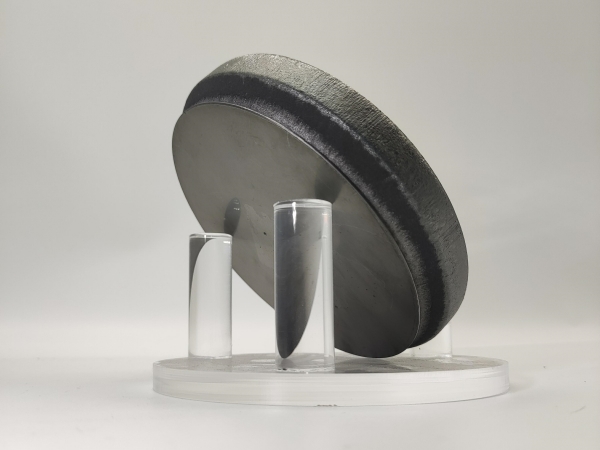
Abstract: Gallium Nitride (GaN), a core third-generation wide-bandgap semiconductor, is widely used in high-end fields due to its excellent properties. The quality of GaN epitaxy highly depends on substrates, and 4H-semi-insulating silicon carbide (4H-SiC) substrates have become the preferred choice for high-end GaN heteroepitaxy, thanks to their superior matching with GaN, efficient heat dissipation, outstanding semi-insulating properties, and mature industrialization. This paper briefly elaborates on their key roles, optimization directions and industrial trends, providing a reference for related R&D and application.
Keywords: 4H-semi-insulating SiC; GaN epitaxy; lattice matching; heat dissipation; semi-insulating properties; industrialization
Introduction
Wide-bandgap semiconductors drive the upgrading of electronic devices, and GaN is the core material for high-frequency RF and power devices. As the carrier of GaN epitaxy, the substrate directly determines the epitaxial quality and device performance. Compared with sapphire, Si and free-standing GaN substrates, 4H-semi-insulating SiC substrates have comprehensive advantages, making them the optimal solution for GaN epitaxy. Recent technological breakthroughs have further expanded their application scope.
Key Roles of 4H-Semi-Insulating SiC Substrates in GaN Epitaxy
1. Optimizing Lattice Matching for High-Quality GaN Epitaxy
The lattice mismatch between 4H-SiC and GaN is only about 3.5%, much lower than that of other substrates. An AlN nucleation layer on 4H-SiC can filter threading dislocations, controlling the defect density to 10⁸ cm⁻², meeting the requirements of high-frequency devices. Recent research has achieved high-quality GaN epitaxy on 8-inch 4° off-angle 4H-SiC substrates, laying a foundation for large-scale integration.
2. Efficient Heat Dissipation for Stable High-Power Operation
GaN devices generate significant Joule heat at high power, and the thermal conductivity of
4H-SiC (350~450 W/(m·K)) is much higher than that of Si and sapphire, enabling rapid heat dissipation and reducing thermal resistance. 4H-SiC/Diamond composite substrates have been developed to further break through the heat dissipation bottleneck.
3. Semi-Insulating Properties to Reduce Parasitic Losses
For high-frequency RF devices, 4H-SiC achieves resistivity >10⁹ Ω·cm through vanadium doping, effectively preventing RF signal leakage and reducing parasitic losses. Its stable semi-insulating properties make it suitable for extreme application scenarios.
4. Balancing Performance and Cost for Industrialization
4H-SiC substrates have achieved large-scale mass production (6-inch as mainstream), with significant cost advantages over free-standing GaN substrates. Their low thermal mismatch with GaN avoids wafer warpage, ensuring process stability for large-size wafers.
Technological Optimization Directions
Future optimization focuses on four aspects: reducing epitaxial defect density, enhancing semi-insulating stability for higher frequencies, promoting large-scale and standardized production, and developing composite substrates to improve heat dissipation.
Industrial Trends and Application Prospects
With the upgrading of 5G/6G and new energy fields, the demand for
4H-SiC substrates will continue to grow. They have been widely used in RF devices and are expected to replace traditional Si power devices, driving the development of GaN technology towards high frequency, high power and miniaturization.
Conclusion
4H-semi-insulating SiC substrates are the core support for high-end GaN epitaxy, with comprehensive advantages in lattice matching, heat dissipation, semi-insulation and industrialization. Continuous technological optimization will further empower GaN epitaxy and promote the upgrading of the wide-bandgap semiconductor industry.