Introduction
The transition toward electrification, renewable energy, and high-efficiency power conversion is accelerating demand for wide bandgap semiconductor materials. Among them,
4H silicon carbide (4H-SiC) has become the dominant material platform for high-voltage and high-power devices.
The introduction of
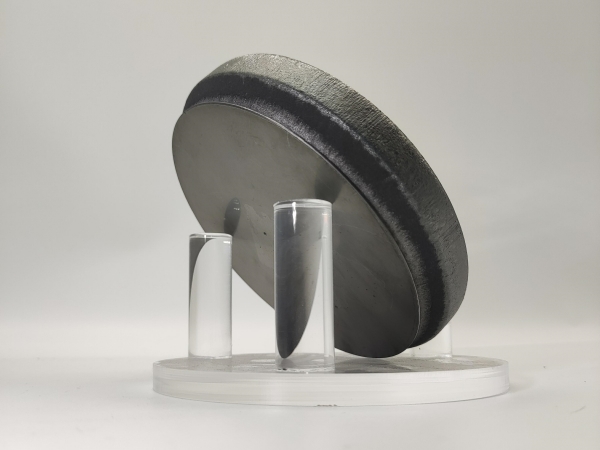
8-inch (200 mm) 4H-N SiC substrates marks a significant milestone in the industrialization of SiC technology. By combining the superior material properties of 4H-SiC with large-diameter wafer scalability, this substrate format enables higher manufacturing throughput, improved cost structure, and enhanced device performance consistency.
This article provides a comprehensive technical overview of 8-inch 4H-N SiC substrates, including material properties, manufacturing considerations, application relevance, and industry implications.

1. What Is 4H-N SiC?
4H-SiC is a hexagonal polytype of silicon carbide characterized by its specific stacking sequence and favorable electronic properties. Compared with other polytypes, 4H-SiC offers:
Wide bandgap (~3.26 eV at 300 K)
High critical electric field (~3 MV/cm)
High electron mobility
Excellent thermal conductivity (~4.5 W/cm·K)
The designation
“N” refers to
n-type conductivity, typically achieved through nitrogen doping during crystal growth. N-type substrates serve as the foundation for vertical power device architectures such as:
SiC MOSFETs
SiC Schottky barrier diodes (SBDs)
PiN diodes
JFETs
These devices rely on high-quality, low-defect n-type substrates to ensure optimal epitaxial growth and long-term reliability.
2. Why 8-Inch (200 mm) Matters
Historically, SiC substrates were limited to 2-inch, 4-inch, and later 6-inch formats. The transition to 8-inch wafers represents a major advancement in SiC manufacturing.
Key Advantages of 8-Inch SiC Substrates
1. Increased Die Count per Wafer
Larger wafer diameter significantly increases usable surface area, enabling more devices per wafer and improving overall manufacturing efficiency.
2. Improved Cost per Device
Although 8-inch substrates require advanced crystal growth and wafering technology, higher throughput and better fab utilization reduce long-term cost per die.
3. Compatibility with Mature 200 mm Production Lines
Many semiconductor fabs are already optimized for 200 mm processing. 8-inch SiC wafers allow integration into established manufacturing infrastructure, accelerating industrial adoption.
3. Technical Requirements for 8-Inch 4H-N SiC Substrates
Scaling SiC substrates from 6-inch to 8-inch is technically challenging due to material hardness, thermal stress, and defect propagation. High-quality 8-inch 4H-N substrates must meet stringent criteria:
1. Low Defect Density
Critical defects include:
Micropipes
Threading screw dislocations (TSD)
Threading edge dislocations (TED)
Basal plane dislocations (BPD)
Minimizing these defects is essential for high device yield and long-term reliability, particularly in high-voltage applications.
2. Uniform Resistivity
Precise nitrogen doping control ensures consistent resistivity across the wafer, supporting uniform epitaxial layer growth and stable electrical performance.
3. Tight Thickness and Warp Control
Due to SiC’s high hardness and brittleness, maintaining tight total thickness variation (TTV), bow, and warp specifications is critical for lithography alignment and process stability.
4. Surface Quality
High-quality chemical-mechanical polishing (CMP) is required to achieve ultra-low surface roughness and eliminate subsurface damage, which can otherwise impact epitaxy.
4. Advantages of 4H-N SiC for Power Devices
The 4H polytype is specifically preferred for power electronics due to its superior electron mobility compared to other SiC polytypes.
Performance Benefits in Vertical Devices
Higher breakdown voltage capability
Lower specific on-resistance
Reduced switching losses
Higher temperature operation capability (>175°C typical junction temperature)
These advantages directly translate into:
Higher inverter efficiency in electric vehicles
Reduced system size and cooling requirements
Improved power density in renewable energy systems
Enhanced reliability in industrial power modules
5. Applications of 8-Inch 4H-N SiC Substrates
The adoption of 200 mm 4H-N SiC substrates supports high-volume manufacturing in:
Electric Vehicles (EVs)
Traction inverters, onboard chargers, and DC-DC converters increasingly rely on SiC MOSFETs to improve driving range and system efficiency.
Renewable Energy Systems
Solar inverters and energy storage systems benefit from higher voltage capability and improved thermal performance.
Industrial Power Conversion
Motor drives, UPS systems, and high-voltage power supplies leverage SiC devices for compact design and high efficiency.
Smart Grid and High-Voltage Transmission
SiC-based devices enable more efficient high-voltage switching and energy distribution.
6. Manufacturing Challenges and Industry Progress
Producing
8-inch 4H-N SiC substrates requires advanced physical vapor transport (PVT) crystal growth, precise thermal field control, and improved boule scaling techniques.
Key industry advancements include:
Enhanced thermal gradient control during crystal growth
Reduction of basal plane dislocation density
Improved boule diameter uniformity
Optimized wafer slicing and polishing technologies
As yield improves and defect density decreases, 8-inch SiC is transitioning from early adoption to scalable mass production.
7. Strategic Importance of 8-Inch SiC
The shift to 8-inch substrates represents more than a size increase—it signals the maturation of the SiC ecosystem.
Strategic impacts include:
Lower cost structure enabling broader EV adoption
Stronger supply chain stability
Higher production capacity for global electrification
Competitive advantage for vertically integrated power semiconductor manufacturers
Companies investing early in 200 mm SiC capability position themselves at the forefront of next-generation power electronics.
Conclusion
8-inch 4H-N SiC substrates combine the superior electrical properties of 4H silicon carbide with the manufacturing scalability of 200 mm wafer technology.
By enabling:
Higher device density
Lower cost per die
Improved process compatibility
Superior electrical performance
they form the foundation for the next wave of high-voltage, high-efficiency power semiconductor devices.
As electrification accelerates across transportation, energy, and industry, 8-inch 4H-N SiC substrates will play a central role in shaping the future of power electronics.